

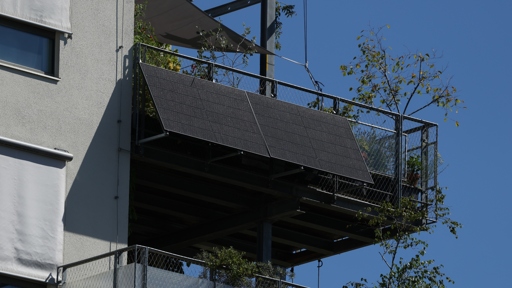
A few weeks ago, the attorney set up what may be the first plug-and-play solar panel in the Bronx. The 220-watt installation, which is secured to the balcony railing with zip ties, has been a boon for the renter and mother of two.
“I have an enormous childcare bill every month. My electricity bills never go anything but up,” Phillips said. “Everywhere you turn, things are only getting more expensive.”
Plug-in solar nonprofit Bright Saver, which provided the roughly $400 panel to Phillips at no cost, estimated that it will produce about 15 percent to 20 percent of the electricity her family uses and save her about $100 per year. Every time Phillips gazes at the device, she said, she’s amazed that “this is just a thing that I plugged in, and I’m generating my own power.”
B) To add to what Cacaocow said, even if the devices themselves didn’t have this function (and I’m not sure all do), it would only ever be an issue for maintenance at the distribution level (last leg from secondary substation to user). Any work upstream of a substation will be fully isolated and grounded first.
This can be an issue for network operators with distribution- connected generation, though.