From a grid stability point, you can’t produce more than is used, else you get higher frequencies and/or voltages until the automatics shut down. It’s already a somewhat frequent occurence in germany for the grid operator to shut down big solar plants during peak hours because they produce way more power than they can dump (because of low demand or the infrastructure limiting transfer to somewhere else)
Negative prices are the grid operator encouraging more demand so it can balance out the increased production.
As someone with a technical background this is the stupidest problem with solar that I don’t get… just turn off the panels in groups until generation is closer to demand… how have engineers not figured that out. And if they have why does this still get written about.
I’m adjacent to this problem, so I have a little context, but am not an expert at all.
To my knowledge, we don’t have granular control over panels. So we can shut off legs of a plant, but that’s a lot of power to be moving all at once.
Instead, prices are set to encourage commercial customers to intake more power incrementally. This has a smoother result on the grid, less chance of destabilizing.
A customer like a data center could wait to perform defragmentation or a backup or something until the price of power hits a cheap or negative number.
Well I wasn’t expecting to find THE right answer in the comments already. Kudos!
And to everyone reading through this post: If you have questions, need more explanations or want to learn more about the options that we have to “stabilize” a renewable energy system and make it long term viable, just ask!
Diversifying means getting energy from different sources like wind, solar, hydro, geothermal and from different regions as there wind always blows somewhere. This is a major strength of the European grid.
Storage mainly happens in pumped hydro, but for short term storage you can also use batteries and flywheels.
On the demand side, energy intensive industry like steel can draw its energy when there is an glut of energy causing lower prices.

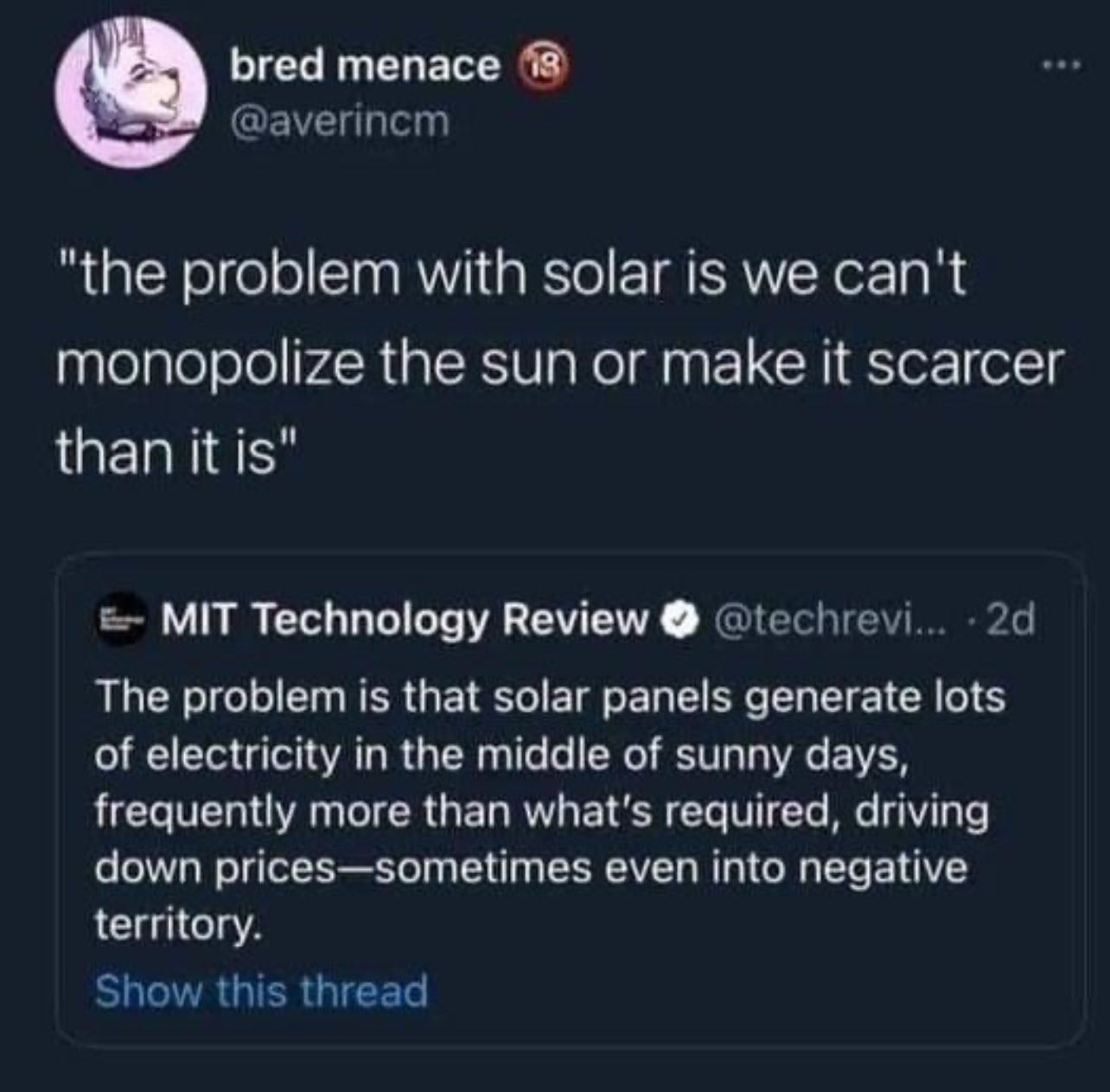
From a grid stability point, you can’t produce more than is used, else you get higher frequencies and/or voltages until the automatics shut down. It’s already a somewhat frequent occurence in germany for the grid operator to shut down big solar plants during peak hours because they produce way more power than they can dump (because of low demand or the infrastructure limiting transfer to somewhere else)
Negative prices are the grid operator encouraging more demand so it can balance out the increased production.
As someone with a technical background this is the stupidest problem with solar that I don’t get… just turn off the panels in groups until generation is closer to demand… how have engineers not figured that out. And if they have why does this still get written about.
Someone is an idiot. Maybe it’s me?
I’m adjacent to this problem, so I have a little context, but am not an expert at all.
To my knowledge, we don’t have granular control over panels. So we can shut off legs of a plant, but that’s a lot of power to be moving all at once.
Instead, prices are set to encourage commercial customers to intake more power incrementally. This has a smoother result on the grid, less chance of destabilizing.
A customer like a data center could wait to perform defragmentation or a backup or something until the price of power hits a cheap or negative number.
Well I wasn’t expecting to find THE right answer in the comments already. Kudos!
And to everyone reading through this post: If you have questions, need more explanations or want to learn more about the options that we have to “stabilize” a renewable energy system and make it long term viable, just ask!
What options do we have to stabilize a renewable energy system and make it long term viable?
Diversify, store and adjust demand.
Diversifying means getting energy from different sources like wind, solar, hydro, geothermal and from different regions as there wind always blows somewhere. This is a major strength of the European grid.
Storage mainly happens in pumped hydro, but for short term storage you can also use batteries and flywheels.
On the demand side, energy intensive industry like steel can draw its energy when there is an glut of energy causing lower prices.