A frog who wants the objective truth about anything and everything.

Alt of ProdigalFrog@slrpnk.net

  • 4 Posts
  • 18 Comments
Joined 1 year ago
cake
Cake day: November 11th, 2024

help-circle
  • You’re hitting a problem I have with Ublue as well. I wanted to experiment with immutable distros last year, but Ublue provided extremely little information on how their different flavors actually differed under the hood. I ended up having to search through their forums for like an hour to find snippets of how their different when some people asked, but it was never comprehensive.

    From what I recall, Bazzite had a few kernel optimizations for gaming, and received updates at a faster frequency than Bluefin, with one of the devs saying that Bazzite would be more likely to experience regressions due to it being more bleeding edge.

    Looking at Bazzite’s front page now, they actually seem to be doing a better job of mentioning what’s unique about it than when I last tried it. But Bluefin and Aurora are still ambiguous.


  • Cinnamon was written from scratch to reflect a more traditional desktop metaphor. It was not created from existing GNOME code.

    Many parts of Cinnamon were forked from Gnome 3 and Gnome 2 (Mate).

    • XPlayer was forked from Gnome Videos (Totem)
    • Xviewer was forked from Eye of Gnome
    • Xreader was forked from Atril from MATE (itself a fork of Envince from Gnome 2)
    • Xed is a fork of Pluma (itself a fork of Gedit 2)
    • Cinnamon’s compositor, Muffin, was forked from Gnome 3’s Mutter compositor

    Many other parts of Cinnamon are made from scratch, but it is not wrong the say it’s also a Gnome 3 fork in many ways.


  • Matrix is so laggy and clunky and slow and annoying. XMPP was just perfect. And the “Conversations” client, for XMPP, is so fucking fast.

    I’ve noticed that as well, XMPP has never been laggy in my experience, it’s very snappy. Matrix is hit or miss, sometimes fine, sometimes a bit slow, especially in larger rooms.

    How does XMPP’s E2EE compare to matrix’?

    As far as I know, XMPP’s OMEMO encryption is modeled off of Signal’s encryption, but modified to function without a centralized server. It’s generally regarded as a very solid, strong encryption, even better than openPGP.

    Matrix’s encryption uses Megolm or olm, which I believe is also regarded well as far as the encryption itself. The issue is that Matrix’s inherent design means it’s spreading copies of the metadata of those messages (though the contents of the message itself is encrypted) far and wide to many servers unnessesarily. Seeing as a lot can still be gleaned from metadata (when a message was sent, to who it was sent to), it’s a concerning model considering how big the main Matrix server is, which means that it usually always receives a copy of all metadata activity on the protocol, unless a self-hosted server completely kills federation (which defeats the point of it).

    A good comment from an older reddit thread summed it up well:

    matrix.org is unique because it hosts so many user accounts. As a result, it becomes a metadata honeypot for the entire matrix network. It’s kind of a design flaw in my eyes. Matrix is great. But it would be even better if it didn’t have this issue.

    Xmpp is federated, but you have the option of not sharing chat metadata with other servers on the network. Matrix doesn’t give that option. matrix.org is effectively a central server due to the fact that a majority of accounts are hosted there, AND all metadata associated with those accounts, which includes metadata from other servers they communicate with, accumulates on matrix.org. I would suspect a very high percentage of matrix metadata, ends up on a single server. Xmpp just does not have this problem.


  • I think you may have an unrealistic idea of how much power low or mid-range gaming PC’s use. Only at the very top-end of PC’s with extreme overclocked components pushed to the limit would you come near 1000w (a $3000 Nvidia GTX 5090 graphics card can use 575w, as an example).

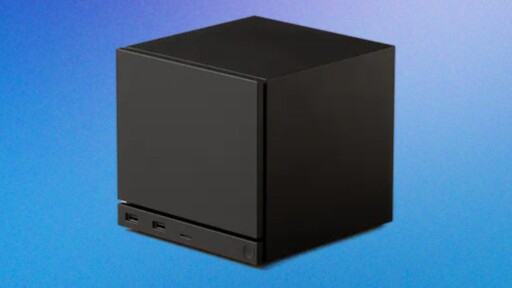
    The Steam Machine uses effectively a laptop CPU (35W TDP) that’ll likely use 40 to 50w max, and the GPU is also a beefed up laptop GPU with a 110W TDP (it’ll probably peak at 140 to 150w, I’m guessing).

    Overall it’ll probably idle at 10 or 15w, and likely use around 70w under average gaming, or 150 to 200w when pushed hard.

    The Steamdeck is certainly still more power efficient (it peaks at 25w when pushed hard), and if you find that it’s powerful enough for the games you play, there’s not much reason to consider getting anything else. But the Steam Machine will be pretty power efficient for a desktop. It kinda has to be, since it only has a single fan for cooling.

    I doubt it would be feasible to replace the power supply with something that takes 12v DC

    All PC’s run off a power supply that inverts 120/220v AC to 3.3V 5V, and 12V DC for the internal components to run off of. Your Steamdeck charger is no different from the power supply inside a desktop PC, it’s just smaller and put in an external shell.

    Unless by 12v DC, you mean you’re charging your Steamdeck with solar panels or from batteries directly, in which case, you could use an Inverter to power the Steam Machine.


  • I think we’ll still get unoptimized crap, but it may sway some studios to consider that lower-end market. We’ll never truly know how much of a difference it makes, but it will undeniably be another data point they’ll have to consider in terms of potential profit.

    The new Indiana Jones game straight up couldn’t be played past the first level with 8gb of vram (and their forced ray-tracing made it require a beefier GPU to get playable framerates), and I’m always curious if that noticeably lowered sales compared to their projections by locking gamers with lower-end hardware.

    Unfortunately, I’m not very optimistic because of the Unreal Engine monoculture

    That is a setback, and I’m not sure how much can truly be done for a studio that opts for UE, other than limiting their game to an artstyle that requires a lower polycount, and perhaps reducing the amount of assets in areas like they used to do for older consoles, but I too doubt that’ll happen.